
17 SEO Copywriting Tips To Help Your Rankings

17 SEO Copywriting Tips To Help Your Rankings

Writing is already hard enough, but writing with the goal of ranking in Google requires even more strategic planning.

Successful SEO copywriters consider what users want, and how search engines actually work, throughout their writing process.

For those site owners who want to grow their visibility through content, understanding SEO copywriting is the right place to start.

What Is SEO Copywriting?

SEO copywriting is the process of creating content with the goal of ranking in search engines for relevant keywords.

The process can be applied to your homepage, product pages, blog posts, or even your profiles on review sites.

When done well, SEO copywriting can increase the total number of keywords that your content ranks for.

Why Does SEO Copywriting Matter To Ranking?

Google relies on natural language processing to understand what users are searching for and what our content is about.

Over the years, NLP models have gotten far more advanced.

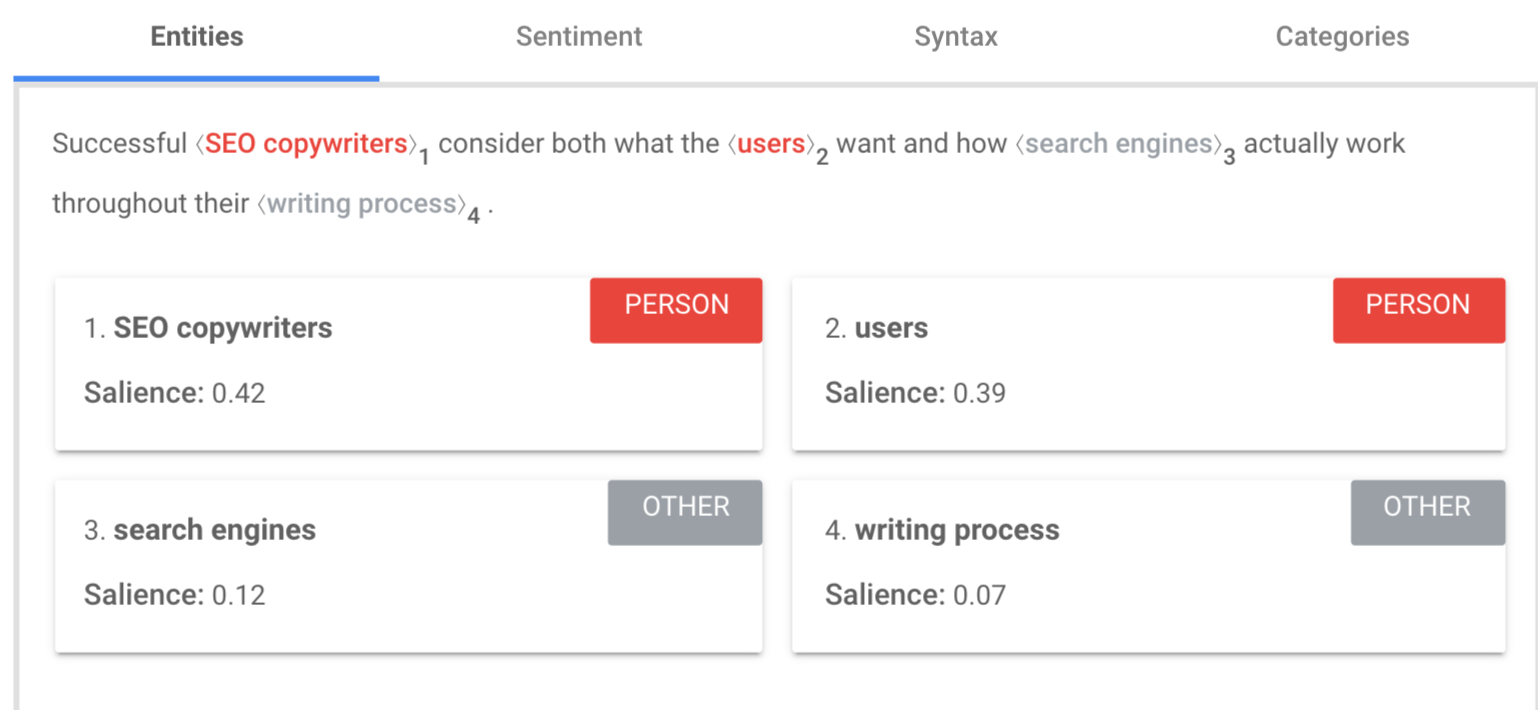
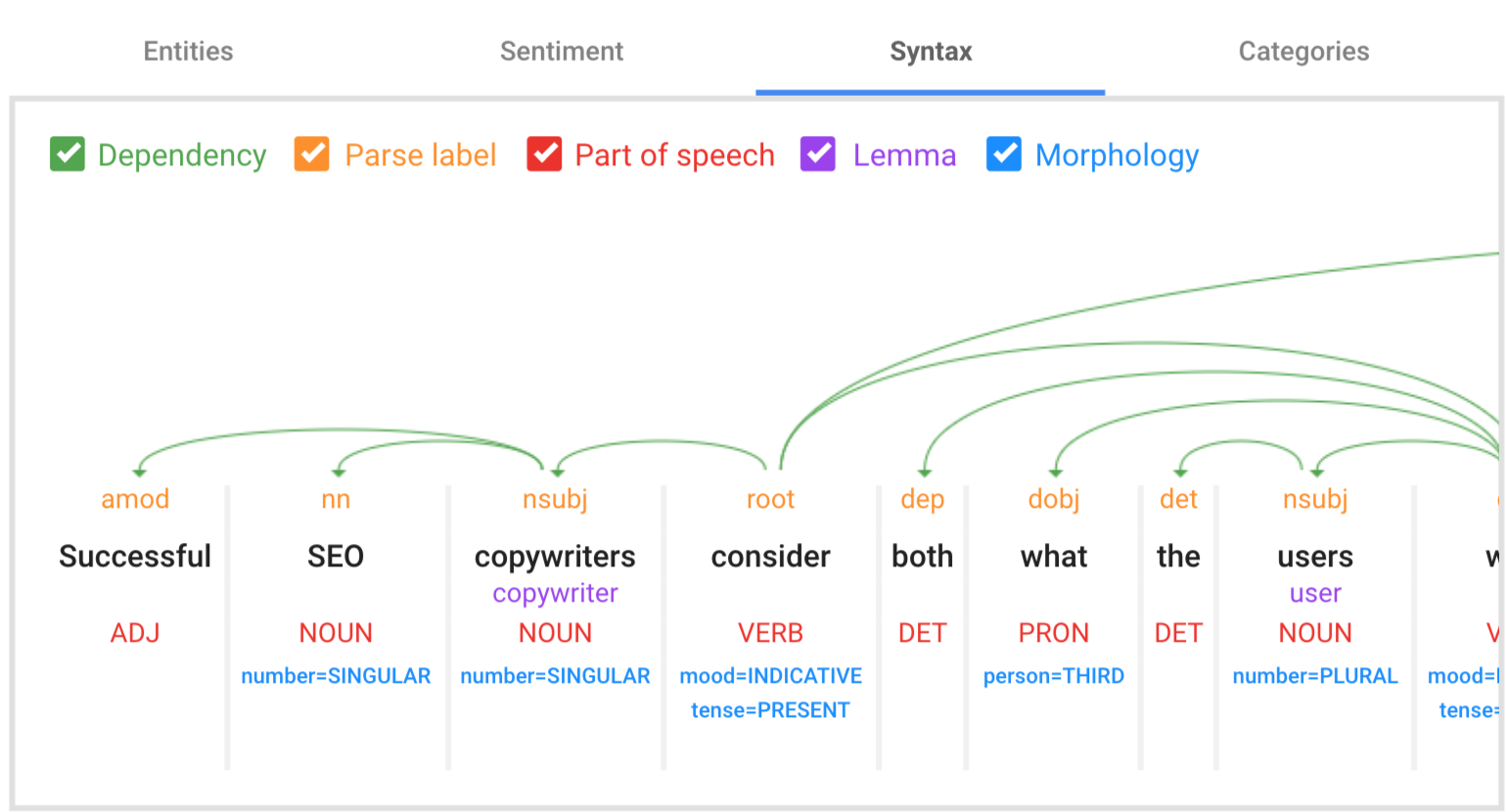
If you want to learn more about NLP technology, put some of your own website content into Google’s Natural Language API Demo.

Then, see how Google works to understand it.

Entities analysis in Google's Natural Language Processing API Demo ToolScreenshot from Google’s Natural Language Processing API Demo Tool, December 2021
Syntax Analysis in Google's Natural Language Processing API Demo ToolScreenshot from Google’s Natural Language Processing API Demo Tool, December 2021

Because of Google’s advancements in NLP, SEO copywriting has evolved to be far less about quick tricks and far more about creating informative and valuable content for users.

But as seen above, Google is still a robot.

SEO copywriters should consider how search engine technology actually works and leverage that knowledge when writing their content.

SEO Copywriting Tips For Better Rankings

The best content will always be created with users in mind.

But, there are strategic choices copywriters can make to help crawlers better understand their content and promote it accordingly.

Here are some SEO copywriting tips for creating content that is loved by both users and search engines alike.

Research And Prewriting

1. Choose A Realistic Keyword Goal

Before you start writing, you should have a clear keyword target in mind. But make sure you set your content up for success by setting realistic and achievable keyword goals.

Keyword research is the foundation of the SEO copywriting process.

You might be tempted to choose industry keywords that have higher search volume, but those keywords are often extremely competitive.

If you are a website with less authority, you’re unlikely to rank on page one for those terms, no matter how high-quality your content is.

So how do you know if your content stands a chance of ranking?

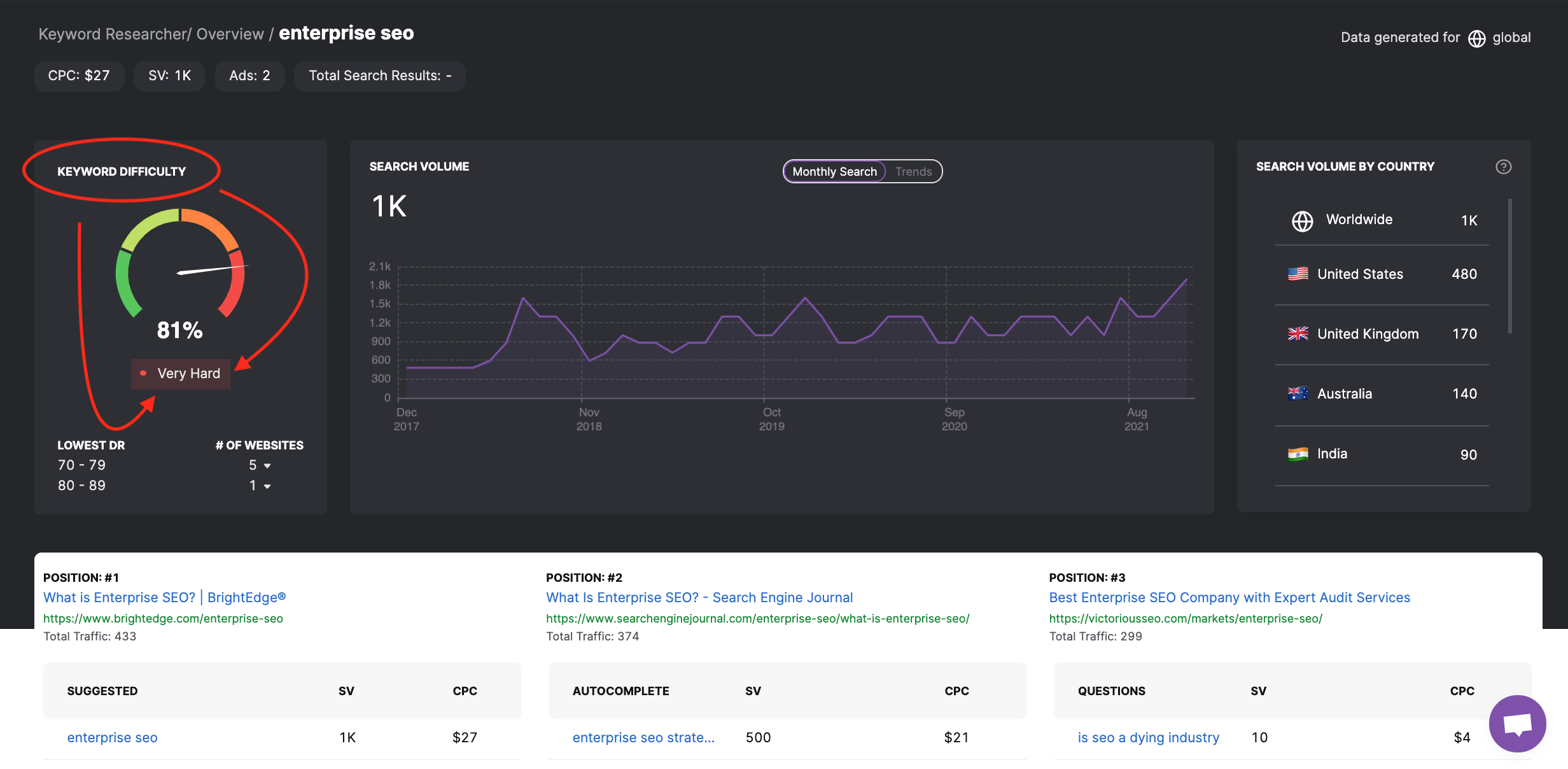
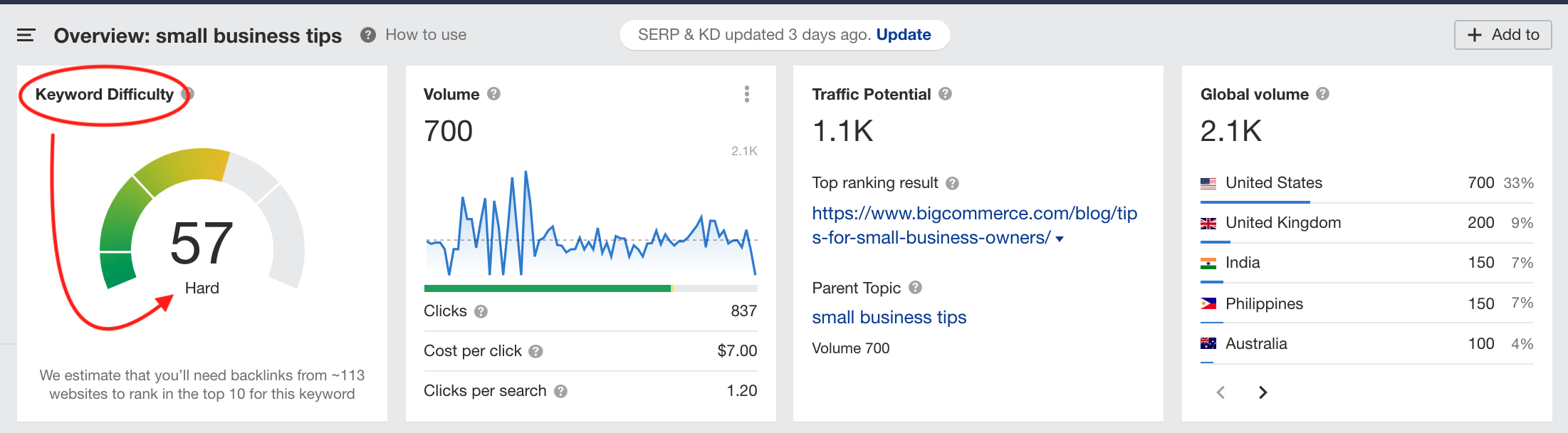
Keyword difficulty scores can serve as a benchmark for your keyword goals.

Keyword difficulty score in the SearchAtlas keyword researcher toolScreenshot from SearchAtlas, December 2021
Keyword Difficulty score in Ahref's Keyword ExplorerScreenshot from Ahrefs, December 2021

I suggest finding relevant keywords with difficulty scores that are less than or equal to your site’s DA.

These keywords might be long-tail or have more informational search intent, but they can present real opportunities for your content to rank quickly and start driving clicks.

2. Analyze The Top-Ranking Content 

Want to know what it will

Read More

10 Advanced SEO Skills To Level Up Your Career

10 Advanced SEO Skills To Level Up Your Career

Many of us get to a stage in our careers as SEO professionals where we feel a little bit stagnant.

We’ve been optimizing sites for a while and feel pretty confident that we can do it well.. but there’s that nagging thought there’s more we could be doing.

That there is another layer of expertise that would make us more efficient, employable, and confident.

In this article, you’ll find 10 skills that can level up your SEO competency.

These aren’t necessarily essential skills for all SEO experts (you’ll find those here).

But developing these advanced SEO skills could help you go deeper within your specialism, become a more well-rounded marketer, and bump you into a new salary or freelance rate, too.

1. Intent Analysis

Intent analysis is the decoding of a user’s intention behind the keyword they enter into a search engine.

When someone types [pizza restaurant] into a search engine, what is the end result they are hoping for?

Do they want to know what pizza restaurants are nearby?

Are they in the market to open a pizza restaurant?

Are they looking for a job in a pizza restaurant?

Developing your understanding of the psychology behind what searchers want is a critical skill for those wishing to go further in their SEO competency.

This will help you both satisfy a user’s need when they land on a page and also increase your page’s likelihood of being ranked in their search.

It can’t just stop there, however.

You must also understand what the search engines perceive users to want from the content they are searching for.

For instance, from my location in the U.K., if I search for [pizza restaurants] in Google from my desktop device, I get a mixture of results.

I get the option to click through to search on other websites:

Google Local Search Comparison ResultsScreenshot from search for [pizza restaurants], Google, January 2022

This is followed by the Map Pack and then a mix of review and editorial sites and restaurants’ websites.

If I am trying to rank a website all about the history of pizza restaurants in my country, I might struggle.

Google has identified the user intent as being either navigation – wanting to go to a local restaurant – or comparative, as in wanting to compare options in the local area.

Resources To Learn More

2. Coding

There is no question that understanding HTML, CSS, and JavaScript can help you to ensure your websites are set up in a bot-friendly manner.

Although SEO experts do not need to be fully-fledged developers, having an understanding of code can help you to identify issues with rendering, indexation, and crawlability.

There are times when knowing the basics of how code is created, or being able to read code that already exists, can help your SEO.

It can aid your communication with the developers who may need to change it.

It can assist you in pinpointing incremental improvements to your site’s performance.

Learning to code is not a prerequisite

Read More

International SEO: How to Optimize Your Website for Other Countries

International SEO: How to Optimize Your Website for Other Countries

Search engine optimization (SEO) is critical to help your brand reach the first page of search results and ideally climb into the top 5 positions for your primary keyword.

But what happens when you want to expand outside of local markets? With Google now seeing more than 3.5 billion searches per day, there’s a massive opportunity for brands to capture new customers. The caveat is that existing SEO practices may not translate – and in some cases, may actually hurt your brand in other countries.

To avoid this potential pitfall, a robust international SEO strategy is critical. Here’s what you need to know about what it is, how it works, how it’ll benefit you, and what steps you can take to create an effective plan.

Ready? Shkojme! Idemo! Vámonos! Let’s go!


International SEO Strategy

An international SEO strategy is a combination of the policies, processes, and practices that your brand uses to optimize search content for other countries. The goal of international SEO is to make it easy for search engines to identify where your business operations are located and what languages you support.

Effective strategies leverage a combination of geographic and language data to develop SEO plans that drive reliable ROI. A strong international SEO strategy will help your company reach new markets and multiply revenue.


What does international SEO do for company websites?

An international SEO strategy for websites focuses on creating content that’s applicable to local markets, as well as developing a website structure that makes it easy for search engines to find and serve the right webpages to the right users at the right time.

Consider a company that sells window shades in the United States and is making a move into Canada. First, you’ll want to ensure Canadian customers are sent to the right pages on your website – pages that contain information about Canadian locations, Canadian shipping times, and fees and costs in CAD.

You’ll need a website structure that includes both U.S. and Canadian pages and leverages enough metadata that search requests from users will direct them to the right page for their current location.


Does my business need an international SEO strategy?

It depends.

If you have no plans to expand beyond local markets – such as your current city or state – international SEO probably isn’t worth the time and resources required. In fact, international SEO can backfire if your business is entirely local. Customers who land on international pages won’t be happy when they discover you serve a very small geographic area.

On the other hand, if you’re looking to expand beyond country borders, it’s worth spending on international SEO. Given the sheer number of companies competing on the global stage and the increased challenge in ranking highly for relevant keywords, a comprehensive strategy is critical.

Still not sure whether you should go for a local SEO strategy or international SEO strategy?


International SEO vs Local SEO

The biggest difference between local and international SEO is scale. While local

Read More

The 3 Components of Achievements in a Holistic Seo Prepare

The 3 Components of Achievements in a Holistic Seo Prepare

Viewpoints expressed by Entrepreneur contributors are their individual.

If there is just one piece of guidance that small business house owners should abide by to acquire at research motor optimization, it’s this: Stop placing it in a box. More frequently than not, folks think that ranking in lookups only requires basically investigating key terms and developing inbound links. And sure, they issue, but are just parts of a more substantial equation, and surely shouldn’t be your only emphasis. Rating better in Google and attracting skilled and enduring targeted traffic involve a attitude shift. This is the place holistic Search engine marketing arrives in. 

What is holistic Search engine optimization? 

The expression, broadly, refers to enhancing each individual element of a site instead than focusing on one, or just a number of. Having all the important features of Search engine optimization effectively not only boosts your brand’s organic lookup visibility, it also keeps website visitors content and helps make them want to do business with you. In purchase to fully grasp holistic Search engine optimisation, a business enterprise owner should really bear in mind Google’s approach with searches, which is to support persons obtain the very best information and facts and present it in the most practical way. For that reason, a holistic prepare include things like 3 tasks: content design and style, person experience (UX) and semantic composition. 

Linked: 5 Ways to Make Revenue With Seo in 2022

1. Information structure

It’s no mystery that visual information will increase the benefit of a web-site for customers, but when remaining unoptimized, it can sluggish down its general performance. Listed here are a handful of variables to take into account:

  • Mobile-friendliness. If you haven’t carried out it but, be confident to check if your internet site can be considered and employed simply on smartphones and tablets, as much more than half of lookups done by Google now arrive from cellular gadgets. One way to make your web page cell-friendly is to use clear navigation. Velocity is one more important element to increase, specifically specified Google’s Core Net Vitals
  • Pictures. Even though significant and crisp illustrations or photos glimpse wonderful, any browser will need more time to load them, which is why they ought to be minimized if achievable. Making use of schema markup for items or pictures also allows enhance a site SERP (search motor effects webpages) presence.
  • Code. Websites that have been constructed using JavaScript offer you more interactivity. Even so, it makes challenges with crawling, rendering and indexing content material. Any person who makes use of JavaScript frameworks should really not panic, but start out diagnosing opportunity issues in Google Lookup Console. JavaScript Website positioning is an exceptionally highly effective tactic to that finish.

Connected: Reduced-Code and No-Code Layout Is the Potential of Website Making

2. Person working experience

Typically referred to as UX, this is a visitor’s notion of a website. If they’re capable to uncover what they’re searching for and meet up with plans (like generating a

Read More

Why SEO is important for e-commerce: an easy-to-follow guide

Why SEO is important for e-commerce: an easy-to-follow guide

Whether you just started your e-commerce business or have been around for a while – attracting more customers is likely important to you. For e-commerce websites, higher (and better quality) traffic often equals more sales.

When it comes to funnelling higher quality leads to your website, there’s no better strategy than SEO. Advertising experts agree that SEO produces the highest ROI of any marketing tactic, and the results it brings last longer.[i] Despite this, it’s common for online sellers to build and maintain their store with almost no SEO strategy.

If up until now you’ve been ignoring SEO or have simply been unsure of how it adds value to your online store, this guide is for you. Here, we will be explaining what e-commerce SEO means, why it’s vital for success, and how to get started.

What is SEO?

SEO stands for “search engine optimization.” It includes a whole range of tactics designed to help increase the quantity and value of search engine traffic that goes to a website. Essentially, the goal is to help your website pages rank higher on search engines, allowing you to have better visibility and leads.

E-commerce SEO is specially targeted towards improving the number of leads, and ultimately the sales volume of e-commerce sites. Even if you already have a lot of website traffic, SEO tactics work to attract better-qualified leads. So, you not only boost your website traffic, but also draw more visitors that are willing to make a purchase.

SEO works by tweaking and sometimes overhauling various aspects of your website. These include improving your website content, creating a better website design, and making your web pages load faster.

SEO strategy isn’t arbitrary though, instead, it follows a meticulous plan to improve your website in relation to certain factors that search engines use to rank search results. These factors are called ranking signals.

Consider this: Every time you search for something on a search engine, it produces a list of numbered results. The main factor that determines where your website shows up, in 1st place or 1,000,000th, is the performance of your website compared with these ranking signals. Examples of ranking signals include:

  • Page load speed
  • Mobile-friendliness
  • Content relevance and quality
  • Website and content structure
  • Domain name authority
  • User experience metrics, such as bounce rate, page speed, and time on page
  • Backlink number and quality

Most of the popular search engine platforms, such as Yahoo, Bing, Google, and Baidu all use similar signals. However, it’s important to note that Google is by far the most important platform to rank on, simply because of its dominance.

Google controls a jaw-dropping 92.27% of the global search engine market share,[ii] while more than 90% of all search queries around the world take place on Google.[iii] Thus, it is clear that Google is THE search engine to rank on, plain and simple.

seo for e-commerce

Why is SEO important?

You now know what SEO

Read More

3 Differences Between SEO and SEM in Digital Marketing

3 Differences Between SEO and SEM in Digital Marketing

Are you looking to find the perfect digital marketing strategy for your business? Search marketing can work well for you to raise brand awareness, boost website traffic, and increase your revenue. However, to run your campaign well, you must familiarize yourself with the most popular search marketing strategies, SEO and SEM.

3 Differences Between SEO and SEM in Digital Marketing

DiggityMarketing / Pixabay

Marketing professionals often use the terms SEM and SEO interchangeably. However, these strategies are different, and you need to know their differences to manage your search marketing campaign better.

This post will discuss the similarities and differences between SEO and SEM. But before tackling them, let us first familiarize ourselves with these terms.

What is Search Engine Optimization?

Google Knowledge Graph defines search engine optimization (SEO) as the process of optimizing the traffic to a website by making it appear on the first page of the results list of a search engine called search engine results pages(SERP) during a search query. SEO is part of SEM.

Brands employ organic methods to rank high in SERPs in an SEO campaign. You can use several SEO strategies to increase your visibility to search engines like Google during their searches. Experts usually group these SEO techniques and tricks into three categories, namely:

  • Technical SEO

    – Technical SEO involves the strategies to improve the technical aspects of your website to optimize its foundation and backend structure. Among the website aspects tackled by these procedures are mobile-friendliness, page speed, crawlability, indexing, structured data, security, and site architecture. This category aims to improve both the user and search engine experience.

  • On-page SEO

    – On-page SEO includes all activities you do to improve your website’s researchability. Among the strategies in this category are HTML source code optimization, content creation, strategic keyword choice and placement, heading optimization, title tags, and meta descriptions. Implementing an excellent on-page SEO strategy will result in better visibility with search engines and higher SERP rankings.

  • Off-page SEO

    – Off-page SEO includes activities to build your website’s reputation to the search engines. The main strategies include link building to authority sites and managing directory profiles and local listings. Other off-page activities you can do to boost your website include influencer outreach, guest blogging, brand mentions, social networking, and broken link building. If you have reputable website connections, the search engines will consider your site dependable and trustworthy and favor you during their search.

What is Search Engine Marketing?

Wikipedia defines search engine marketing (SEM) as a digital marketing strategy that uses paid and unpaid advertising and optimization techniques to promote a website and boost its visibility in SERPs. Aside from SEO, the other SEM strategies are:

  • Display advertising

    – These are image, video, or text-based advertisements aimed at convincing users in digital platforms like social media and websites to make a specific action.

  • Remarketing

    – This strategy involves posting or showing ads to users who previously used your app or visited your website to boost brand awareness or sell a product or service.

  • Shopping/product advertising

    – This is

Read More