
How Can We Improve Rankings For Older Content? Ask An SEO

How Can We Improve Rankings For Older Content? Ask An SEO

How can you help existing webpages get new traction and move up in search rankings?

That’s the question posed by Faith in this edition of Ask An SEO. She wrote:

“I have a few keywords ranking on the fourth or fifth page of Google.

It’s been a year ranking at this position. What should I do to improve the rankings now?”

Adam Riemer from Adam Riemer Marketing shares his response with Miranda Miller, Writer & Editor, in this edition of Ask An SEO.

Evaluating internal pages that may be competing against your candidates for optimization is an important first step, he says.

Improving Page Speed and Core Web Vitals may also give you new opportunities to improve rankings.

Adam shares a step-by-step process for finding opportunities to improve existing content with local schema, improving a user’s on-page experience, getting links from relevant media sources, and more.

You can watch the full video here and find the full transcript below.

Ask An SEO: Improving Rankings With Adam Riemer [Full Transcript]

Miranda Miller: Hello, and welcome to Ask An SEO. … This week, we have with us Adam Riemer from Adam Riemer Marketing, AdamRiemer.me.

The question that people have for you this week comes from Faith.

Faith has a few keywords ranking on the fourth or fifth page of Google. They’ve been stable there for about a year, and she would like to know: What can she do to improve those rankings now?

Adam Riemer: Okay. That’s a good question and comes up way too often. I have to deal with that with a lot of clients. Well, not deal with it, but I get to solve that problem for a lot of clients.

Improving Rankings For Existing Content, Step By Step

Adam Riemer: And basically, the very first thing I do is, I’ll take a tool, whether it’s Authority Labs or Semrush; I think Ahrefs does this too.

And I’ll look to see: Do we have competing pages in those positions?

And is there one with an indent after it, maybe? And from there, I’ll be like, Okay, well… do both of these pages need to exist?

If there is nothing competing and it’s just one page there, I start to look at the page experience, and I say, Okay, why is this not the best experience for the user or for the search query?

And then we start to address, and you can look at, Do we properly explain the concept?

Is the article as good as it could be?

Is it formatted correctly? Could it use some bulking up?

Sometimes, one thing I’ve had to do a lot recently… there’s a case study on my website right now recently, I have to delete most of the copy because people just wrote copy to hit a minimum word count by actually reducing it, and just sharing the actual information.

We’ve been able to pop our clients up to the top positions from there.

Another option

Read More

How to do a competitive analysis for local SEO

How to do a competitive analysis for local SEO

When it comes to local SEO, there’s a lot of noise.

From the latest industry buzz talk to the nuances of a specific website, a strategy to-do list can quickly become flooded with tasks that don’t consider the big picture.

However, none of these tasks matter if you ignore competitors. 

A competitive analysis for local SEO can uncover: 

  • Who is ranking at the top.
  • Why they achieved this ranking.
  • Where they’ve chosen to target their strategy.
  • What level of effort they’ve put into ranking.
  • When you might be able to outrank them.

If you understand the effort and approach used by those who rank well locally, then you can thrive in even the most competitive search environments. 

Determining your local competitors

Competitors in local SEO require a different approach than competitors in national markets.

In a national SEO campaign, competitors are usually targeting hundreds or thousands of keywords. At the local level, most competitors typically target something in the range of 20-100 keywords. 

Local SEO typically has fewer keywords because it is defined by its physical community. 

Local SEO is designed to support a network of small businesses, franchises and physical goods and services. Unlike national SEO, there is no SaaS or cloud-based architecture or leading national ecommerce website.

Local dealers, practitioners and businesses offer a service or item that customers will receive in their community. Products and services from these businesses are limited to the parameters of their local population. If a local business offers garage door repair, demand is limited to the number of people who need garage door repair in that community. 

Because local SEO is limited to a physical community, discovering competitors is straightforward. Identify 5-10 core keywords and see who ranks first.

However, competitive analysis for local SEO quickly becomes complicated when there is more than one location for the business. Each location poses unique challenges. 

Although local competitive analysis considers a smaller portion of keywords, the complexities of local search impact these keywords. 

3 steps to conducting a competitive analysis for local SEO

A competitive analysis for local SEO considers keyword search visibility in the context of three local ranking factors: 

  • Compare proximity.
  • Assess Google Business Profile (GBP) optimization.
  • Analyze on-page content.

1. Compare proximity

Are you located farther from the city center than your top competitors? Does this information about your location even matter? After all, it’s not like you can move locations for the sake of SEO. 

Understanding your location within the context of your competitor’s location is important because proximity might answer why they rank #1. 

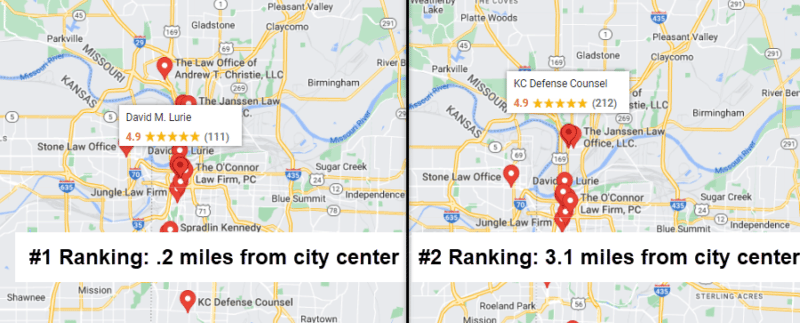
In the image below, a search for “kansas city defense attorney,” a highly desirable keyword for defense attorneys in Kansas City, the #1 ranking is held by a law firm that is located .2 miles from the city center of Kansas City. The #2 ranking business is located 3.1 miles from the city center. 

top 2 local search results for "kansas city defense attorney".

A quick search for your top keyword can indicate whether proximity will impact your campaign. Review the distance between verified location

Read More

The Best SEO Conferences In 2022-2023 (Virtual And In-Person)

The Best SEO Conferences In 2022-2023 (Virtual And In-Person)

As an industry in a constant state of flux – thanks to changing algorithms, user needs, and competitor content – search engine optimization is a field that demands professionals to stay up to date on the latest trends and best practices. 

And while you could spend hours scouring the internet for useful articles, forum discussions, and the like, there’s a better way to gain new knowledge and grow your network simultaneously: SEO conferences. 

In just a few hours or days, you can gain a wealth of new information from peers and industry leaders, including information on what’s working and what isn’t and various search engine ranking success strategies.

They allow you to share strategies, brainstorm solutions, and build relationships with current and future SEO leaders.

Of course, in the aftermath of a global pandemic that put the kibosh on in-person events for over a year, many of the top events in SEO went virtual.

Thankfully, as things have started to return to some sense of normalcy, the physical events have often returned.

But don’t worry if you’re still not comfortable going to crowded events with a bunch of strangers; there are plenty of online conferences, summits, and workshops too. 

Here’s a look at some of the best online and in-person SEO conferences for the rest of 2022 and heading into 2023. 

Coming Up In 2022

There have already been several excellent SEO and digital marketing events held this year, but if you missed them, don’t fret. There are still plenty of good ones on the docket. 

You may not even have to travel; with concerns over COVID-19 still high, many events have added virtual components to their in-person events, so you can get all the benefits of attending – without risking your health. 

Inbound 2022

Date: September 6-9, 2022

Format: In-person or online

Location: Boston, MA 

Speakers: Barack Obama, TJ Adeshola, Brian Halligan, and others

Cost: In-person – $1,199; Virtual – free  

About: This annual event is powered by HubSpot, bringing together global thought leaders for a hybrid conference discussing marketing, sales, and customer success operations.

It covers a wide range of topics, including an SEO meetup hosted by Dale Bertrand and strategies for uncovering data-driven insights.

Ad Age Next: Social & Influencer Marketing

Date: September 13, 2022

Format: TBD 

Location: TBD 

Speakers: TBD

Cost: TBD

About: Ad Age’s Next event will focus on the growing importance of influencer marketing in an age of ubiquitous social media.

Creators, brands, and agencies will be on hand to discuss how they are approaching this new economy.

Content Marketing World

Date: September 13-16, 2022

Format: In-person or online

Location: Cleveland, OH 

Speakers: Kim Olson, Alison Jarris, Justin Ethington

Cost: In-person starting from $1,499; Virtual from $699

About: Over four days, attendees will learn strategies for building winning SEO teams, systems, and processes.

With more than 100 sessions, workshops, and industry forums, you can choose the topics and sessions that are relevant to you. Thousands of marketers and representatives from numerous global brands will

Read More

An SEO guide to audience research and content analysis

An SEO guide to audience research and content analysis

How your customers find you can vary significantly. It may be based on their interests, needs or pain points.

Some people may already know exactly what they need and search for that on Google. Others may be just starting the research process. Others may already know what they need and compare to identify the best source to purchase from.

In this stage of your SEO research and planning, you’ll want to identify:

  • Target personas
  • Buying stages
  • Potential keywords 

Your goal will be to map your target personas, buying stages and keywords for each persona and buying stage.  

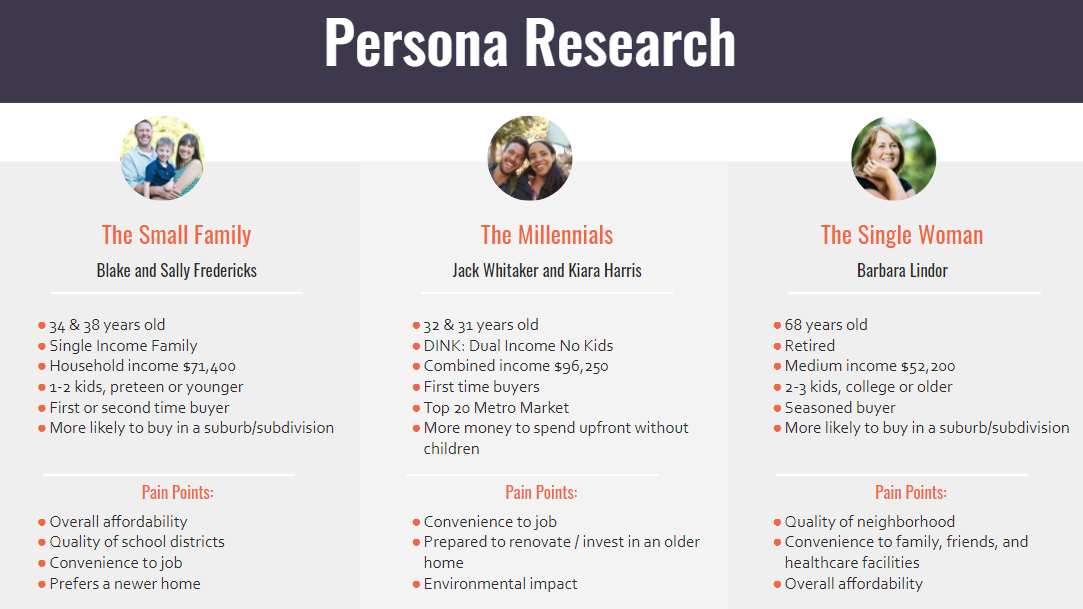
Persona research 

You can start by using customer service data or information from your Google Analytics demographic details. With this information, you can start creating target personas.  

Below is an example of possible target personas for a real estate company.

Once you have your personas and ideas of who they are, what they need, and what they are looking for, you’ll want to map out the possible steps they’ll take in their buying journey.

Buyer’s journey

Finally, you can add the possible keywords they’ll search for and map them to the journey.

Map keywords to persona to the buyer’s journey

The goal of this phase is to identify all of the possible ways you can be found and to make sure you have content optimized on your website targeting these buying phases and keywords.

You’ll start by identifying primary, root phrases. As you progress, you can go deeper into long-tail terms or semantically related keywords.

This will allow you to identify gaps and opportunities that were missed during your initial baseline and competitive research. Some of these keywords won’t be uncovered unless you truly understand your audience and their needs and pain points.

This stage will complete your research phase and give you all the information to create your content strategy and focus your on-page SEO priorities.   

Evaluate your existing content

With your comprehensive keyword research, the next step is to look at the existing content of your site and see if it’s optimized properly.

  • Does your website have pages that are not getting any traffic from Google, pages that are near-duplicates or multiple pages targeting the same keyword?
  • Do you have content pieces to match the keyword list you created in the previous stage?

Before creating a content calendar or editorial strategy, it’s ideal to audit your existing content. By reviewing your existing pages, you can decide which pages need to be removed, consolidated or optimized.

Some of the elements you can look for include:

  • Page traffic
  • Primary keyword
  • Number of keywords ranking
  • Word count
  • Internal linking

To perform a content audit, you’ll need to export all of your pages from your CMS or use an SEO audit tool, such as Screaming Frog or Semrush Site Audit, to get a list of your site’s existing pages.

Consolidate all of this data into a content audit spreadsheet. Your spreadsheet could look something like this:

Assess your site’s content

Once you have collected all

Read More

12 Essential On-Page SEO Factors You Need To Know

12 Essential On-Page SEO Factors You Need To Know

Did you ever play Tetris? If so, you probably remember how there was no real way to “beat” the game. It basically just got faster and faster with every level.

In some ways, search engine optimization (SEO) is the same.

Not in that it has a catchy 8-bit soundtrack or that it rewrites your dreams, but in that, it never ends.

There’s no point at which you can sit back and relax, content that your site is at the top of search engine results pages (SERPs) once and for all.

Sure, you might have reached the pinnacle today, but an SEO pro’s work is never done.

Every change to Google’s algorithm or competitor content could knock you off that top spot, which means you have to keep up with changes.

And that means your on-page SEO needs to be on point. But before we dive into that, it’s important to have a high-level overview of how Google and other search engines work.

Search Engine Basics

Search engines send out crawlers, or spiders, to explore the internet. They follow links from one site to another, building a map of the content called a search index.

In the process of exploring sites, these crawlers are also evaluating their content, determining what kind of information it contains.

This data is then used by the search engine’s algorithm to determine how well the content of that specific site answers queries from users.

The better it answers the query, the more highly it will be ranked on the SERP.

In Google’s never-ending quest to provide better results to users, its algorithm is updated frequently. This inevitably leads to changes in rankings, which then requires someone to optimize the website to improve or ensure rankings.

What Is On-Page SEO & Why Is It Important?

On-page SEO, which is sometimes called on-site SEO, is the process of tweaking a page’s content, tags, and internal links to improve search visibility and increase traffic.

In other words, it’s a means of optimizing your website to help search engines better understand your website.

And this, of course, comes with a whole host of benefits.

The first is in the amount of traffic.

The first five organic results on a search page get 67.60% of all clicks. The next five account for only 3.73%. And it drops from there. So, if you want to get traffic, you need to be near the top.

Secondly, high-ranking sites have much better click-through rates (CTR). The first Google mobile search result has an average organic CTR of 26.9%.

Now consider that 92.4% of internet users who search on their mobile phones for something nearby visit that business the same day and you can start to see the impact organic SEO can have on your bottom line. And on-page optimization is an important factor in your organic ranking.

Hopefully, by this point, you’ve grasped the importance of on-page SEO. Now it’s time to get started. Let’s dive

Read More

SEM vs. Seo: What is The Distinction?

SEM vs. Seo: What is The Distinction?

CSS. HTTP. URL. HTML.

It’s doable the only discipline that works by using extra acronyms and initializations than website advertising and marketing is the armed forces.

The navy uses them to help save time.

In some cases, it seems like our field only employs them to confuse newcomers.

And it is not unusual for even skilled industry experts to blend them up.

Some of the most common blunders transpire when it comes to the similar and associated, but distinctly diverse principles of lookup motor optimization (Seo) and lookup motor marketing and advertising (SEM).

After on a time, in the halcyon days of the early world-wide-web (that is, circa 2001), Search engine marketing referred to a section of SEM.

But, as the language and nuance of world-wide-web marketing and advertising shifted, search engine marketing and advertising arrived to refer to a specific type of digital marketing and advertising. So, what’s the change?

At times also referred to as natural and organic (Search engine marketing) and inorganic (SEM) search, equally are concentrated on employing Google (and to a lesser extent other look for engines) to travel targeted traffic to a certain site.

From a higher-degree see (and really do not fear, we’ll dive into the specifics a little bit afterwards), Search engine marketing is the approach of strengthening your web site to deliver visitors, although SEM is working with paid out procedures to demonstrate up in searches.

Really do not experience negative if you have mixed these terms up. It occurs all the time.

To aid you keep away from any uncomfortable mishaps when talking with other digital entrepreneurs, we have compiled this helpful tutorial to give you an overview of these principles.

Bewildered? Don’t be, all will be created obvious in the conclusion. Now let’s get started out.

PPC, An additional Variable In The Mix

As we get started, just to make every thing even far more perplexing, let’s incorporate one particular a lot more initialization into the mix: PPC or shell out-for every-click on.

Ok, that just one is not seriously truthful for the reason that PPC is just yet another term for SEM – or at least, a portion of it.

PPC is most probably a phrase that evolved by way of the Wild West days of early research engine tactics when diverse persons employed diverse conditions to refer to the exact same factor.

Sooner or later, shell out-for each-click and research engine promoting came to mean the exact point: paid digital advertising advertisements on search platforms.

Spend-per-click on, regardless if it’s identified as PPC, CPC (that is cost-for every-simply click), paid out lookup, or lookup adverts are referring to compensated research advertising and marketing, commonly as a result of lookup engines like Google and Bing.

Other terms and ways applied in electronic marketing initiatives – especially those tied

Read More